How to Import Eco-Friendly Tableware from China to Mexico: A Practical Buyer's Guide
- Share
- publisher
- Greenwood Woodencutlery
- Issue Time
- Mar 11,2026
Summary
The article provides a step-by-step guide for Mexican businesses importing sustainable tableware from China. With growing environmental awareness and regulations in Mexico, many restaurants and retailers are shifting from plastic to eco-friendly alternatives such as wooden, bamboo, bagasse, and PLA tableware. China is a major supplier due to its advanced manufacturing, wide product range, and competitive prices.

With the surge in environmental awareness, Mexico's market for sustainable tableware is expanding quickly. Restaurants, retailers, and event planners are increasingly replacing plastic utensils with green alternatives to align with consumer preferences and government regulations. China stands out as a top supplier for wholesale sustainable tableware, offering advanced manufacturing, a variety of options, and affordable prices for compostable and biodegradable products. This guide offers a straightforward, step-by-step approach for Mexican importers seeking disposable eco-friendly tableware from China. Adhering to these guidelines can minimize delays and unexpected expenses.
Understanding Mexico's Import Landscape for Eco-Friendly Tableware
In Mexico, imports of sustainable tableware are regulated by key bodies: SAT (tax administration service), COFEPRIS (federal commission for the protection against sanitary risks), and SEMARNAT (secretariat of environment and natural resources). Duties from China follow non-FTA rates based on the product's HS code. COFEPRIS emphasizes food-contact safety, while SEMARNAT oversees environmental claims and labeling for compostable or biodegradable items.
Step 1: Specify Your Eco-Friendly Tableware Needs
Start by outlining the exact products you need, such as:
- Wooden cutlery
- Bamboo chopsticks and stirrers
- Sugarcane pulp containers
- Paper-based tableware
- Palm leaf plates
- CPLA cups
Each material impacts pricing, strength, and food suitability, so define these early to streamline sourcing.
Step 2: Identify and Vet Chinese Suppliers for Sustainable Tableware
Strategies for Locating Suppliers
Use B2B sites like Alibaba and Global Sources to find suppliers. Focus on those specializing in food-safe sustainable tableware with export history to Latin America. Seek manufacturers offering comprehensive ranges, including compostable items, biodegradable containers, and bamboo/wooden disposables for efficient one-stop procurement.
Essential Supplier Verification Checklist
To ensure reliability and avoid issues, check:
1. Valid business licenses and production scale matching your needs.
2. Third-party food-contact safety reports.
3. Eco-certifications like BPI, OK Compost, and EN13432.
4. Recent quality inspection reports.
5. Proof of exports to Mexico or similar markets.
Established suppliers like Ancheng, with over 20 years in the field, provide these credentials and serve major brands such as Starbucks, Costco, and Tesco.
Testing Samples and Products
Request pre-production samples before bulk orders. Conduct:
1. Physical checks for material, weight, and finish.
2. Durability tests for printed or branded items.
3. Lab analysis for safety and compostability to meet Mexican standards.
This prevents customs holds due to non-compliance.
Step 3: Navigate Mexico's Compliance and Certification Standards
Required Certifications for Imports
Sustainable tableware must have food-contact certifications from Chinese and international sources (e.g., FDA or LFGB). COFEPRIS verifies no chemical leaching. While not mandatory, SEMARNAT requires backing for eco-claims via certifications like BPI or OK Compost. Include a Material Safety Data Sheet (MSDS) for all items.
Labeling Under NOM-050
NOM-050-SCFI-2004 mandates Spanish-language labels with product name, importer details, origin, and usage instructions. Suppliers can apply these during packaging to reduce post-arrival efforts.
Step 4: Determine HS Codes, Duties, and Full Landed Costs
Accurate HS Code Assignment
Correct classification avoids penalties. Common codes include:
- 4419 for wooden/bamboo items
- 4823 for paper/bagasse products
- 3924 for PLA-based tableware
Collaborate with your broker and supplier for precision.
2026 Import Taxes and Duties
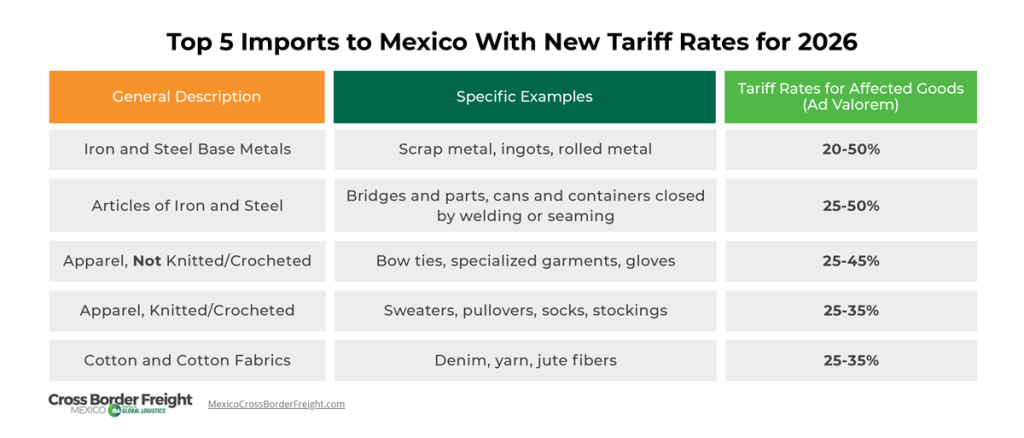
Duties range from 10-20% based on HS codes. Add 16% IVA (value-added tax), plus fees for customs, brokerage, and testing.
Calculating and Optimizing Landed Costs
Landed cost formula: Product price + Freight + Insurance × (1 + Duty rate) × (1 + IVA rate) + Local fees. Reduce expenses through bulk buys for lower unit costs and optimized packaging. Ensure documentation accuracy to evade extra charges.
Step 5: Arrange Shipping from China to Mexico
Shipping Methods
Sea freight is economical for wholesale, with 25-35 days for FCL (full container load). LCL suits smaller lots but costs more per unit. Air freight (3-5 days) is ideal for urgent, low-volume needs but pricier.
Recommended Incoterms
- FOB: Supplier handles export to Chinese port; buyer manages the rest—balances control and responsibility.
- DDP: Supplier oversees everything to your Mexican door—convenient for novices. Partners like Ancheng leverage ties with carriers (e.g., MSK, COSCO, DHL) for smooth DDP.
Step 6: Handle Mexican Customs Clearance
Upon arrival, your broker submits docs to customs for review. After approval and payment, goods are released. Provide bilingual (Spanish/English) paperwork with detailed invoices covering descriptions, values, origins, and consignee info.
Common Causes of Delays
Holds often stem from wrong HS codes, missing RFC numbers, improper Spanish labels, undervalued invoices, or absent safety certs. Partner with a licensed broker and double-check docs pre-shipment.
Pre-Shipment Checklist for Success
Before departure:
- Confirm supplier docs and certs.
- Approve and test samples.
- Verify HS codes with broker.
- Ensure Spanish labels and RFC inclusion.
- Appoint a broker.
- Budget all costs.
- Conduct inspections.
- Secure full-value insurance.
This ensures timely, compliant delivery.
Collaborate with Ancheng: Your Trusted Eco-Tableware Partner
For expanding your sustainable inventory, team up with a dependable manufacturer. Ancheng, a China-based expert in bamboo and wooden products, offers skewers, cutlery, and custom packaging. Committed to quality and global standards, Ancheng aids Mexican businesses in going green. Reach out for samples, quotes, or tailored import support today.